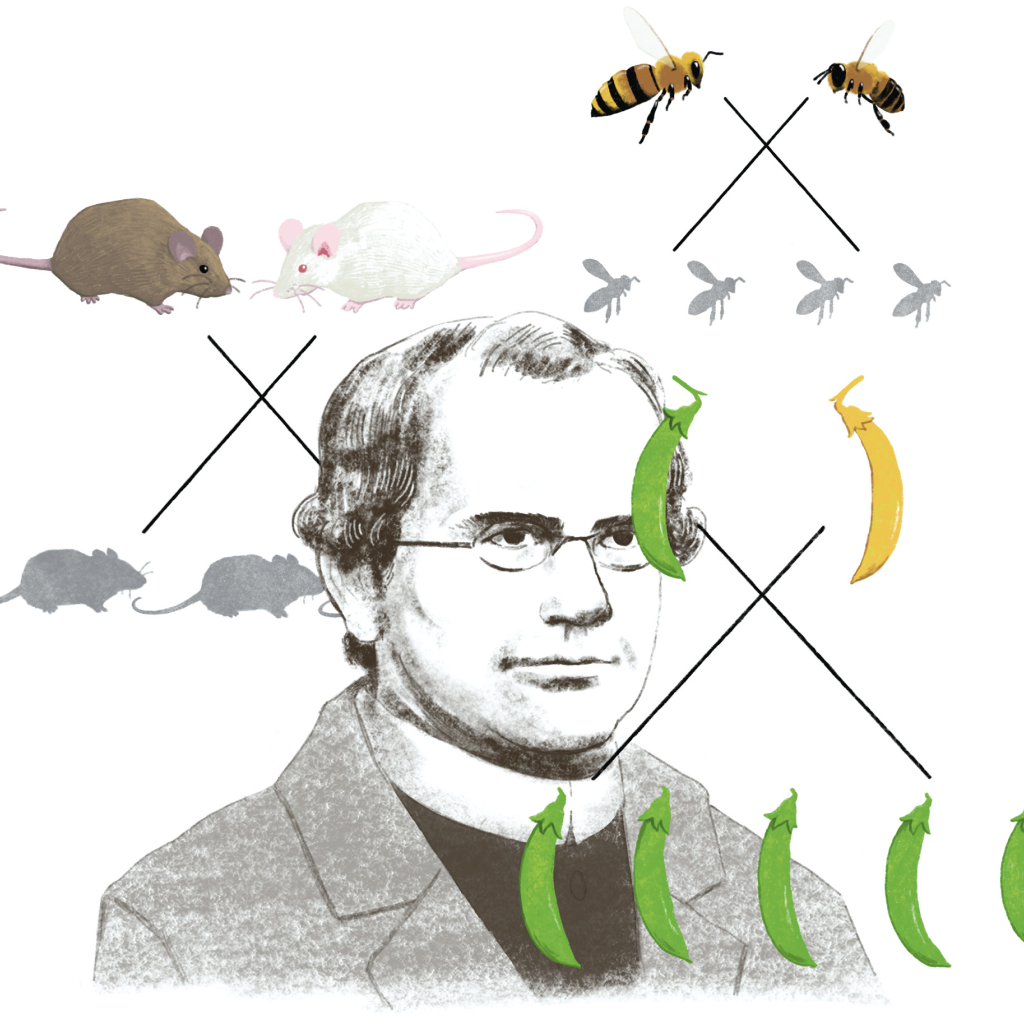
- Clarify the process of trait inheritance from parents to offspring.
- Construct a Punnett square to illustrate genetic outcomes.
- Analyze and forecast the phenotypes of offspring based on provided genotypes using Punnett squares.
Explore the Fundamentals of Genetic Inheritance and Assist a Family in Predicting the Likelihood of Color Blindness in Future Generations.
University / College

Enhance students' involvement in science by immersing them in interactive learning scenarios. Create simulations for experiments, provide hands-on training in laboratory techniques, and convey theoretical concepts through captivating visual experiences to improve their overall long-term learning outcomes.
Ever Been Curious About the Nature of Proteins? Explore Protein Structure and Learn How to Detect Its Presence in Food Samples.
Employ size exclusion chromatography (SEC) for the preparation of a sample containing a protein associated with Parkinsons disease. Explore the advantages of utilizing this method in your laboratory investigations and formulate a hypothesis regarding the elution times of particles of varying sizes.
Apply microscopy and spectroscopy methods to unravel the enigma behind a significant fish mortality event. Examine the correlation between dissolved nitrogen levels and an algal bloom to understand their impact on the fish population.
Explore the fundamentals of antibodies, antigens, the ABO blood group system, and the Rhesus factor, and their critical roles in blood transfusions. Next, assist a young couple in assessing the potential risk of Rhesus disease in their upcoming child.
Step into the role of a genetic counselor and assess whether the daughter of a breast cancer patient faces an elevated risk of developing breast cancer. Assist her by creating a pedigree and pinpointing the faulty gene through linkage analysis.
Examine the microscopic composition of the small intestine and explore the benefits and constraints of light, fluorescence, and electron microscopy.
imaginX seamlessly integrates with leading LMS (Learning Management Systems), enabling educators to track student performance and allowing students to maintain their work records. It is compatible with popular platforms such as Canvas, Blackboard, Moodle, Google Classroom, Schoology, Sakai, Brightspace/D2L, and can also be used independently of an LMS.