imaginX is used by many amazing schools and universities

University / College
Learning Objectives

At the end of this simulation, you will be able to:
  • Exhibit a thorough comprehension of nucleophilic addition reactions.
  • Offer an introduction along with instances illustrating nucleophilic addition to carbonyl groups.
  • Illustrate the mechanistic pathways accurately for frequently encountered nucleophilic addition reactions.
  • Showcase an in-depth grasp of the Grignard reaction.
  • Elaborate on the specific functions of each reagent employed in the Grignard reaction.
  • Articulate the intricacy of Grignard reaction conditions and the ability to adapt procedures accordingly.
  • Acquire both knowledge and hands-on proficiency in fundamental laboratory techniques.

How do virtual labs work?

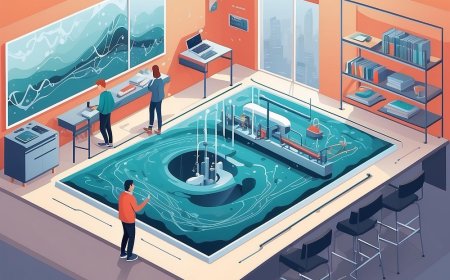
Enhance students' involvement in science by immersing them in interactive learning scenarios. Create simulations for experiments, provide hands-on training in laboratory techniques, and convey theoretical concepts through captivating visual experiences to improve their overall long-term learning outcomes.

  • Access web-based simulations that are compatible with laptops, Chromebooks, tablets, and iPads, eliminating the need for software installation.
  • Incorporate a teacher dashboard for automated grading and monitoring of student progress.
  • Utilize embedded quizzes to assist students in mastering scientific content.
  • Comprehensive repository of educational materials, including learning resources, lab reports, videos, theory pages, graphics, and more.

Relevant Course Packages All Course Packages

Virtual Lab on Spectrophotometry: Understanding the Beer-Lambert Law through Absorbance Experiments.

Construct a personalized spectrophotometer for the purpose of measuring the absorbance of a reaction product while on Mars!

Virtual Lab: Trophic Levels - Grazer vs. predator

Immerse yourself in a firsthand exploration of energy transfer within a food web, navigating the journey of a zebra towards its feeding ground by interacting with organisms at various trophic levels in this simulation.

Virtual Lab for Recrystallization: Filtration of Crystals and Melting Point Measurement

How can we effectively segregate liquids from solids, and how can we assess the purity of the resulting solid? This simulation will teach you the application of suction filtration and melting point techniques, equipping you to address both of these inquiries.

Virtual Lab on Microscopy

Examine the microscopic composition of the small intestine and explore the benefits and constraints of light, fluorescence, and electron microscopy.

Virtual Lab: Phenols Detection Using the Phthalein-Dye Test

Explore the hidden spectrum within phenolphthalein and learn how to reveal its vibrant hues by manipulating pH levels. Delve into the microscopic world of molecules to understand the science behind the colors of chemicals, and apply this knowledge in conducting the phthalein-dye test for phenols.

Virtual Lab on Cell Division Principles: Mitosis and Meiosis

Participate in a cell biology research team to explore the potential use of a toxic compound from the yew tree in cancer treatment. Immerse yourself in an animated human cell model and employ light and fluorescence microscopy to investigate the process of cell division.

LMS Integration

imaginX seamlessly integrates with leading LMS (Learning Management Systems), enabling educators to track student performance and allowing students to maintain their work records. It is compatible with popular platforms such as Canvas, Blackboard, Moodle, Google Classroom, Schoology, Sakai, Brightspace/D2L, and can also be used independently of an LMS.

Platform Features

Unlimited users faculty & students
Simulations
Simulations
Pedagogy Experts
Pedagogy Experts
Gamification
Gamification
Multiplayer
Multiplayer
Networking
Networking
Assignments
Assignments
Auto Grading
Auto Grading
AI
AI
LMS Integartion
LMS Integartion
Go Back Top