imaginX is used by many amazing schools and universities

University / College
Learning Objectives

At the end of this simulation, you will be able to:
  • Create and test circuits using fundamental logic gates: AND, OR, NOT, NAND, NOR, XOR, and XNOR.
  • Design and simulate advanced circuits including multiplexers, encoders, decoders, counters, and shift registers.
  • Use Boolean algebra and Karnaugh maps to simplify digital logic expressions and optimize circuit designs.
  • Analyze and optimize circuit performance by evaluating timing constraints and propagation delays.
  • Effectively combine digital components to design functional systems with accurate logic operations and signal processing.

How do virtual labs work?

Enhance students' involvement in science by immersing them in interactive learning scenarios. Create simulations for experiments, provide hands-on training in laboratory techniques, and convey theoretical concepts through captivating visual experiences to improve their overall long-term learning outcomes.

  • Access web-based simulations that are compatible with laptops, Chromebooks, tablets, and iPads, eliminating the need for software installation.
  • Incorporate a teacher dashboard for automated grading and monitoring of student progress.
  • Utilize embedded quizzes to assist students in mastering scientific content.
  • Comprehensive repository of educational materials, including learning resources, lab reports, videos, theory pages, graphics, and more.

Relevant Course Packages All Course Packages

Wind and Solar Energy Systems Simulation

This XR simulation provides training on designing and analyzing renewable energy systems, focusing on wind turbines and solar panels. Virtual simulations allow students to explore the dynamics of wind turbines, including blade aerodynamics and energy conversion efficiency. Students can design solar panel arrays, optimize their angle for maximum energy generation, and evaluate their performance. The simulation offers real-time feedback on renewable energy efficiency, cost savings, and environmental impact, enabling students to make informed decisions about optimizing renewable energy systems.

Blueprint Reading and Layout

The Blueprint Reading and Layout Simulation teaches students how to read and interpret construction blueprints and translate them into physical layouts on-site. Virtual blueprints are provided, where students identify dimensions, layouts, and construction details. Interactive scenarios guide students in marking and laying out floor plans, walls, and structural components based on blueprint specifications. Real-time feedback is given on layout accuracy, alignment, and proper interpretation of building plans.

Work zone setup & Traffic control

Explore effective work zone setup and traffic control techniques with XR simulations to ensure safety and compliance in roadwork and construction sites.

Mechanics of Solids and Fluids

Equip students with the foundational knowledge of solid mechanics and fluid dynamics, key principles in engineering applications. This course focuses on understanding the behavior of solid materials under stress and strain, as well as the movement of fluids within various engineering systems. Students will explore how these principles interact to optimize structural designs and fluid-based systems.

Renewable Energy Systems (Solar, Wind, and Battery Storage)

The Electromagnetics and Wave Propagation module offers virtual simulations of renewable energy systems, including solar power, wind turbines, and battery storage. Through interactive exercises, students analyze energy conversion efficiency, system design, and grid integration, gaining a deeper understanding of electromagnetic interactions and wave propagation in renewable energy technologies.

Framing and Structural Carpentry

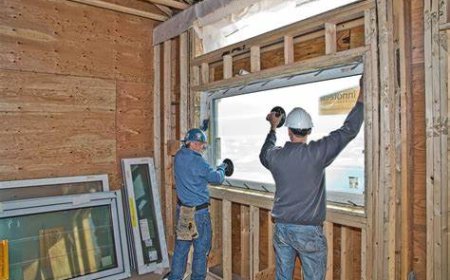
The Framing and Structural Carpentry Simulation trains students in the framing techniques used for constructing walls, floors, roofs, and ceilings in residential and commercial buildings. Virtual scenarios guide students through the process of measuring, cutting, and assembling studs, joists, and rafters. Interactive tutorials cover the creation of window and door openings, the installation of headers, and ensuring structural stability. Students receive real-time feedback on measurement accuracy, alignment, and adherence to building codes.

LMS Integration

imaginX seamlessly integrates with leading LMS (Learning Management Systems), enabling educators to track student performance and allowing students to maintain their work records. It is compatible with popular platforms such as Canvas, Blackboard, Moodle, Google Classroom, Schoology, Sakai, Brightspace/D2L, and can also be used independently of an LMS.

Platform Features

Unlimited users faculty & students
Simulations
Simulations
Pedagogy Experts
Pedagogy Experts
Gamification
Gamification
Multiplayer
Multiplayer
Networking
Networking
Assignments
Assignments
Auto Grading
Auto Grading
AI
AI
LMS Integartion
LMS Integartion
Go Back Top