imaginX is used by many amazing schools and universities

University / College
Learning Objectives

At the end of this simulation, you will be able to:
  • Evaluate the impact of natural disasters on infrastructure using simulation-based scenarios.
  • Develop emergency response plans and risk mitigation strategies for civil engineering projects.
  • Analyze disaster recovery strategies and their application to real-world scenarios.
  • Implement resilience-building measures to minimize damage during disasters.
  • Understand key techniques for effective disaster management and risk assessment.

How do virtual labs work?

Enhance students' involvement in science by immersing them in interactive learning scenarios. Create simulations for experiments, provide hands-on training in laboratory techniques, and convey theoretical concepts through captivating visual experiences to improve their overall long-term learning outcomes.

  • Access web-based simulations that are compatible with laptops, Chromebooks, tablets, and iPads, eliminating the need for software installation.
  • Incorporate a teacher dashboard for automated grading and monitoring of student progress.
  • Utilize embedded quizzes to assist students in mastering scientific content.
  • Comprehensive repository of educational materials, including learning resources, lab reports, videos, theory pages, graphics, and more.

Relevant Course Packages All Course Packages

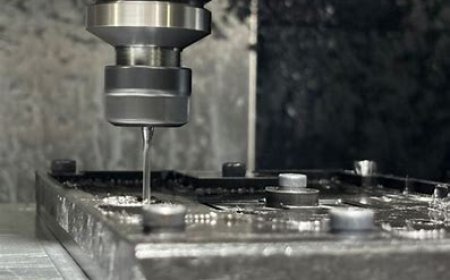
CNC Machine Programming and Operation

CNC Machine Programming and Operation trains students on Computer Numerical Control (CNC) machines, essential in modern manufacturing for automated machining. Students will virtually program CNC machines to cut, mill, or shape materials according to specific designs, and simulate the generation and execution of G-code. The course includes 3D visualization of machining paths, with real-time feedback on tool wear, precision, and cycle times to optimize machining processes.

Magnetic Resonance Imaging (MRI) Overview

Explore the fundamentals of Magnetic Resonance Imaging (MRI) techniques and their critical role in radiography, supported by immersive XR-based simulations.

Geotechnical Engineering and Soil Mechanics

This XR simulation provides students with hands-on training in soil analysis, foundation design, and geotechnical investigation techniques. Virtual soil testing labs allow students to perform essential tests such as the Standard Penetration Test (SPT), Cone Penetration Test (CPT), and triaxial shear tests. The simulation includes interactive scenarios for designing shallow and deep foundations, retaining walls, and methods for slope stabilization. Students receive feedback on soil classification, bearing capacity, settlement predictions, and foundation stability to ensure they understand the fundamental principles of geotechnical engineering.

Thermodynamics and Heat Transfer

Provide hands-on experience in understanding thermodynamic processes and heat transfer mechanisms through immersive XR simulations. Virtual labs enable students to simulate processes like conduction, convection, and radiation across various materials and environments. Interactive scenarios allow exploration of thermodynamic cycles, such as the Rankine, Brayton, and Carnot cycles, offering a comprehensive understanding of energy systems. Real-time feedback helps students analyze temperature distribution, energy efficiency, and system optimization, fostering practical insights into thermodynamics and heat transfer in engineering applications.

Renewable Energy Systems (Solar, Wind, and Battery Storage)

The Electromagnetics and Wave Propagation module offers virtual simulations of renewable energy systems, including solar power, wind turbines, and battery storage. Through interactive exercises, students analyze energy conversion efficiency, system design, and grid integration, gaining a deeper understanding of electromagnetic interactions and wave propagation in renewable energy technologies.

Gas Furnace Installation and Repair

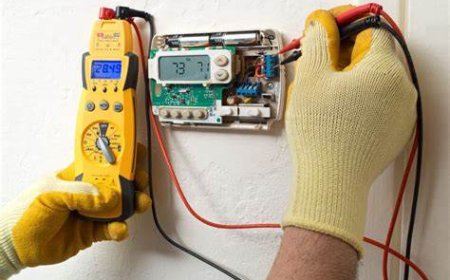
The Gas Furnace Installation and Repair Simulation teaches students to install and repair gas furnaces, with a focus on proper venting and safety protocols for working with natural gas. Virtual scenarios guide students through connecting gas lines, ductwork, and venting systems for gas furnaces. Interactive exercises help students practice lighting pilot lights, adjusting gas valves, and monitoring flame sensors. The simulation provides feedback on safety practices, combustion efficiency, and troubleshooting issues like gas leaks, ignition failures, or cracked heat exchangers.

LMS Integration

imaginX seamlessly integrates with leading LMS (Learning Management Systems), enabling educators to track student performance and allowing students to maintain their work records. It is compatible with popular platforms such as Canvas, Blackboard, Moodle, Google Classroom, Schoology, Sakai, Brightspace/D2L, and can also be used independently of an LMS.

Platform Features

Unlimited users faculty & students
Simulations
Simulations
Pedagogy Experts
Pedagogy Experts
Gamification
Gamification
Multiplayer
Multiplayer
Networking
Networking
Assignments
Assignments
Auto Grading
Auto Grading
AI
AI
LMS Integartion
LMS Integartion
Go Back Top