imaginX is used by many amazing schools and universities

University / College

Learning Objectives

At the end of this simulation, you will be able to:
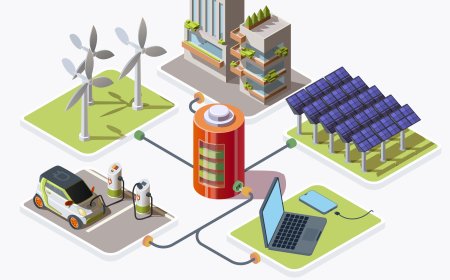
  • Understand the fundamental principles of wind turbine dynamics and solar panel energy generation.
  • Simulate and optimize the design of wind turbines, focusing on blade aerodynamics and energy efficiency.
  • Design solar panel arrays and analyze optimal panel angles for maximum energy generation.
  • Evaluate the efficiency, cost savings, and environmental impact of renewable energy systems.
  • Gain hands-on experience in renewable energy system design and performance analysis.


How do virtual labs work?

Enhance students' involvement in science by immersing them in interactive learning scenarios. Create simulations for experiments, provide hands-on training in laboratory techniques, and convey theoretical concepts through captivating visual experiences to improve their overall long-term learning outcomes.

  • Access web-based simulations that are compatible with laptops, Chromebooks, tablets, and iPads, eliminating the need for software installation.
  • Incorporate a teacher dashboard for automated grading and monitoring of student progress.
  • Utilize embedded quizzes to assist students in mastering scientific content.
  • Comprehensive repository of educational materials, including learning resources, lab reports, videos, theory pages, graphics, and more.

Relevant Course Packages All Course Packages

Microbiology and Fermentation Processes

Equip students with essential microbiological techniques and the core principles of fermentation in bioprocessing, enhanced by immersive XR experiences. Focus on isolating, culturing, and identifying microbes, while exploring fermentation applications in industries like pharmaceuticals, biofuels, and enzymes through interactive virtual and augmented reality simulations.

Crash Testing and Safety Systems Design

Crash Testing and Safety Systems Design focuses on vehicle crash testing and safety systems design, utilizing XR simulations to analyze crashworthiness and develop occupant protection strategies.

Robotics and Unmanned Aerial Vehicles (UAVs)

Explore the world of designing, building, and controlling Unmanned Aerial Vehicles (UAVs) and aerospace robotics for autonomous flight. In this simulation, students will gain hands-on experience by programming UAVs for specific missions, including navigation, obstacle avoidance, and data collection. Using XR-enabled environments, students will interact with drone dynamics, sensor integration, and flight path optimization techniques, while receiving valuable feedback on UAV stability, control responses, and overall mission performance.

Artificial Organs and Implants Simulation

Enhance students' understanding of artificial organs and implants through immersive XR simulations. Students will explore the design, function, and integration of artificial organs, including heart, kidney, and joint implants, and simulate their implantation and performance in virtual patients.

Geospatial Analysis and Remote Sensing

Explore the power of remote sensing technology and its application in civil engineering projects. Analyze satellite imagery and aerial photographs to map terrain, plan land use, and track urban development. Use geospatial data tools to detect changes in natural resources, land features, and environmental conditions. Receive feedback on data accuracy, interpretation, and the practical integration of this information into infrastructure planning.

Thermodynamics and Heat Transfer

Provide hands-on experience in understanding thermodynamic processes and heat transfer mechanisms through immersive XR simulations. Virtual labs enable students to simulate processes like conduction, convection, and radiation across various materials and environments. Interactive scenarios allow exploration of thermodynamic cycles, such as the Rankine, Brayton, and Carnot cycles, offering a comprehensive understanding of energy systems. Real-time feedback helps students analyze temperature distribution, energy efficiency, and system optimization, fostering practical insights into thermodynamics and heat transfer in engineering applications.

LMS Integration

imaginX seamlessly integrates with leading LMS (Learning Management Systems), enabling educators to track student performance and allowing students to maintain their work records. It is compatible with popular platforms such as Canvas, Blackboard, Moodle, Google Classroom, Schoology, Sakai, Brightspace/D2L, and can also be used independently of an LMS.

Platform Features

Unlimited users faculty & students
Simulations
Simulations
Pedagogy Experts
Pedagogy Experts
Gamification
Gamification
Multiplayer
Multiplayer
Networking
Networking
Assignments
Assignments
Auto Grading
Auto Grading
AI
AI
LMS Integartion
LMS Integartion
Go Back Top