imaginX is used by many amazing schools and universities

University / College
Learning Objectives

At the end of this simulation, you will be able to:
  • Create virtual embedded systems that interface with sensors, actuators, and communication modules for real-world applications.
  • Integrate and control virtual sensors and actuators to perform tasks and gather data.
  • Design systems that use communication protocols (e.g., I2C, SPI, UART) to enable data exchange between devices.
  • Analyze and resolve errors in code and system integration, ensuring proper device communication and functionality.
  • Evaluate system performance and optimize the integration of hardware and software components for efficiency.

How do virtual labs work?

Enhance students' involvement in science by immersing them in interactive learning scenarios. Create simulations for experiments, provide hands-on training in laboratory techniques, and convey theoretical concepts through captivating visual experiences to improve their overall long-term learning outcomes.

  • Access web-based simulations that are compatible with laptops, Chromebooks, tablets, and iPads, eliminating the need for software installation.
  • Incorporate a teacher dashboard for automated grading and monitoring of student progress.
  • Utilize embedded quizzes to assist students in mastering scientific content.
  • Comprehensive repository of educational materials, including learning resources, lab reports, videos, theory pages, graphics, and more.

Relevant Course Packages All Course Packages

HVAC System Installation Simulation

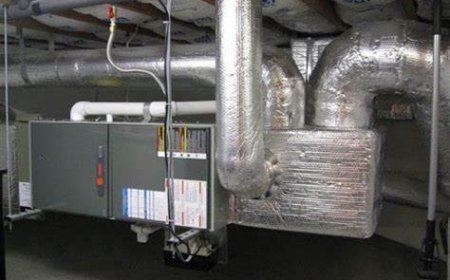
The HVAC System Installation Simulation teaches students how to install various HVAC systems for residential, commercial, and industrial applications, including furnaces, air conditioning units, heat pumps, and ductwork. The simulation allows students to virtually install HVAC units, duct systems, and venting, while engaging in interactive exercises to connect electrical wiring, refrigerant lines, and water drainage systems. Students receive real-time feedback on installation techniques, component positioning, and overall system integrity.

Flooring Installation

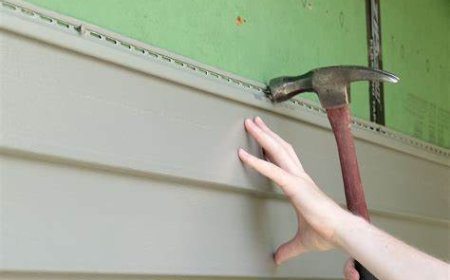
The Flooring Installation Simulation teaches students how to install various types of flooring materials, including hardwood, laminate, tile, and carpeting. Virtual scenarios guide students through the process, from measuring and cutting materials to laying and securing floorboards or tiles. Tutorials cover preparing subfloors, aligning seams, and ensuring smooth, even surfaces for the final installation. Real-time feedback is provided on precision cutting, material placement, and proper finishing techniques to ensure a high-quality flooring installation.

Power Systems and Distribution Networks

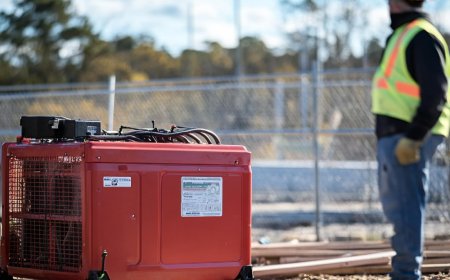
The Power Systems and Distribution Networks module immerses students in virtual environments where they explore the design, operation, and analysis of electrical power grids. Through simulations and interactive tutorials, students learn to manage generators, transformers, transmission lines, and load centers, while optimizing system performance, detecting faults, and ensuring efficient energy distribution.

Mechatronics and Robotics

Explore the integration of mechanical, electrical, and computer systems in the design and operation of mechatronics and robotics.

Kinematics and Dynamics of Machines

Train students in analyzing the motion and dynamics of mechanical systems and linkages using immersive XR simulations. Students will interact with virtual models of mechanisms such as gears, cams, pulleys, and crankshafts to observe and study their movement. The simulation offers interactive lessons on calculating velocities, accelerations, forces, and torques within mechanical linkages, with real-time feedback. The system will help students understand how to evaluate and optimize the efficiency of machines, force transmission, and performance.

Chiller System Installation and Maintenance

The Chiller System Installation and Maintenance Simulation trains students on the installation, maintenance, and troubleshooting of chiller systems used in commercial buildings for large-scale cooling applications. Students will practice virtually installing air-cooled and water-cooled chiller systems, connecting them to cooling towers and air handlers. Maintenance tasks include cleaning chiller tubes, monitoring refrigerant levels, and inspecting compressors. Troubleshooting scenarios will focus on issues like reduced cooling capacity, refrigerant leaks, and mechanical failures. Real-time feedback will be provided on system performance, energy consumption, and efficiency optimization.

LMS Integration

imaginX seamlessly integrates with leading LMS (Learning Management Systems), enabling educators to track student performance and allowing students to maintain their work records. It is compatible with popular platforms such as Canvas, Blackboard, Moodle, Google Classroom, Schoology, Sakai, Brightspace/D2L, and can also be used independently of an LMS.

Platform Features

Unlimited users faculty & students
Simulations
Simulations
Pedagogy Experts
Pedagogy Experts
Gamification
Gamification
Multiplayer
Multiplayer
Networking
Networking
Assignments
Assignments
Auto Grading
Auto Grading
AI
AI
LMS Integartion
LMS Integartion
Go Back Top