imaginX is used by many amazing schools and universities

University / College
Learning Objectives

At the end of this simulation, you will be able to:
  • Gain a comprehensive understanding of the design and programming of robotic systems and mechatronic components.
  • Develop skills in controlling robotic movements and adjusting sensor configurations to ensure precise and efficient operation.
  • Learn how to integrate mechanical and electronic systems using sensors, motors, and control logic for optimal performance.
  • Analyze and troubleshoot robotic systems, focusing on precision, response time, and system integration.
  • Apply robotics principles to solve real-world problems, improving the functionality and performance of mechatronic systems.

How do virtual labs work?

Enhance students' involvement in science by immersing them in interactive learning scenarios. Create simulations for experiments, provide hands-on training in laboratory techniques, and convey theoretical concepts through captivating visual experiences to improve their overall long-term learning outcomes.

  • Access web-based simulations that are compatible with laptops, Chromebooks, tablets, and iPads, eliminating the need for software installation.
  • Incorporate a teacher dashboard for automated grading and monitoring of student progress.
  • Utilize embedded quizzes to assist students in mastering scientific content.
  • Comprehensive repository of educational materials, including learning resources, lab reports, videos, theory pages, graphics, and more.

Relevant Course Packages All Course Packages

Aerodynamics and Fluid Dynamics (CFD)

Explore the principles of aerodynamics and computational fluid dynamics (CFD) to analyze and optimize airflow around aircraft and spacecraft. Experience virtual simulations that allow you to visualize airflow patterns, pressure distribution, lift, drag, and turbulence across aerodynamic surfaces. Experiment with refining wing shapes, airfoils, and control surfaces to enhance flight performance. Gain insights through real-time feedback on aerodynamic efficiency, drag reduction, and flight stability in varying conditions.

Failure Mode and Effects Analysis (FMEA) Simulation

Gain expertise in Failure Mode and Effects Analysis (FMEA) through immersive XR simulations. Learn to systematically identify, assess, and mitigate potential failure points in semiconductor manufacturing processes to enhance reliability and quality.

Advanced Manufacturing Simulations

Explore and enhance your understanding of modern manufacturing processes such as additive manufacturing (3D printing) and smart factory environments. With XR simulations, students can engage in virtual assembly lines where IoT devices track performance and optimize production. Gain insights into advanced techniques like 3D printing, laser cutting, and automated inspection. Experience real-time feedback on system performance, process optimization, and predictive maintenance, all within an immersive XR environment.

Control System Design and Tuning

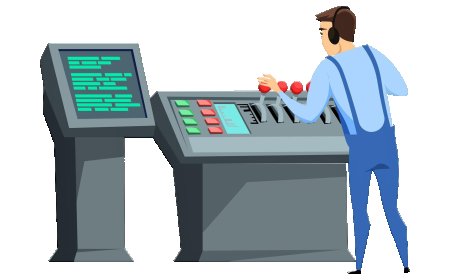
Explore the design, simulation, and tuning of control systems for mechanical and electrical applications. Through interactive simulations, students will design feedback control systems using PID (Proportional-Integral-Derivative) controllers to regulate variables such as speed, temperature, or position. Real-time feedback will help students evaluate control system stability, response times, and error minimization for optimal system performance.

Rocket Propulsion and Launch Systems

Explore the principles of rocket propulsion and the dynamics of launch systems through XR-powered simulations. Students engage in virtual rocket labs where they design and analyze rocket engines, simulate propellant flow, and study thrust and trajectory. Interactive scenarios allow students to gain a deeper understanding of staging, ignition sequences, and flight stability during launch, with feedback provided on propulsion efficiency, fuel consumption, and optimization of launch trajectories.

Airflow and Duct Design Simulation

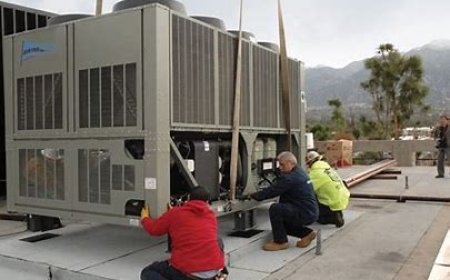
The Airflow and Duct Design Simulation trains students in calculating airflow requirements and designing ducts to ensure HVAC systems operate efficiently. The simulation features virtual tools for calculating airflow based on building dimensions and heating/cooling loads. Students engage in interactive duct design exercises, where they size ducts, select materials, and place vents for optimal airflow. Real-time feedback is provided on pressure loss, air distribution efficiency, and adherence to industry standards.

LMS Integration

imaginX seamlessly integrates with leading LMS (Learning Management Systems), enabling educators to track student performance and allowing students to maintain their work records. It is compatible with popular platforms such as Canvas, Blackboard, Moodle, Google Classroom, Schoology, Sakai, Brightspace/D2L, and can also be used independently of an LMS.

Platform Features

Unlimited users faculty & students
Simulations
Simulations
Pedagogy Experts
Pedagogy Experts
Gamification
Gamification
Multiplayer
Multiplayer
Networking
Networking
Assignments
Assignments
Auto Grading
Auto Grading
AI
AI
LMS Integartion
LMS Integartion
Go Back Top