imaginX is used by many amazing schools and universities

University / College

Learning Objectives

At the end of this simulation, you will be able to:
  • Design, analyze, and optimize transmission lines, matching networks, and impedance scenarios.
  • Simulate and study different antenna types and their radiation patterns.
  • Receive insights on signal strength, frequency response, and antenna efficiency metrics.
  • Apply design principles to enhance signal strength, frequency response, and transmission efficiency.
  • Learn the characteristics and applications of various antenna types, including dipole, loop, and Yagi-Uda antennas.

How do virtual labs work?

Enhance students' involvement in science by immersing them in interactive learning scenarios. Create simulations for experiments, provide hands-on training in laboratory techniques, and convey theoretical concepts through captivating visual experiences to improve their overall long-term learning outcomes.

  • Access web-based simulations that are compatible with laptops, Chromebooks, tablets, and iPads, eliminating the need for software installation.
  • Incorporate a teacher dashboard for automated grading and monitoring of student progress.
  • Utilize embedded quizzes to assist students in mastering scientific content.
  • Comprehensive repository of educational materials, including learning resources, lab reports, videos, theory pages, graphics, and more.

Relevant Course Packages All Course Packages

Air Vacuum Extraction Excavation

This module provides a detailed overview of air vacuum excavation, focusing on the safe and efficient method for exposing underground utilities without causing damage using advanced suction technology.

Photolithography Process Simulation

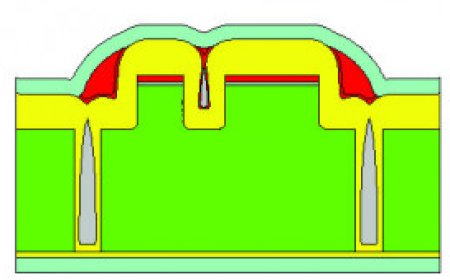
Learn the essential photolithography process in semiconductor manufacturing through immersive XR simulations. Experience virtual hands-on training in masking, exposure, and developing, while mastering equipment operation and alignment precision.

Digital Electronics and Logic Design

The Digital Electronics and Logic Design module immerses students in virtual labs where they design, simulate, and analyze digital circuits. Through interactive scenarios and hands-on exercises, students work with basic and advanced digital components, gaining insights into logic operations, circuit simplification, and timing analysis in digital systems.

Fatigue and Failure Analysis of Aerospace Components

Dive into the analysis of fatigue and failure in aerospace components with XR-powered simulations. In virtual scenarios, students analyze crack propagation, stress concentrations, and fatigue loading on critical parts of aircraft and spacecraft. Interactive lessons allow for predicting failure points, analyzing material fatigue, and learning techniques to implement design improvements to enhance component longevity. Real-time feedback is provided on component durability, the risk of failure, and adherence to safety standards.

Transmission Systems and Gearbox Design

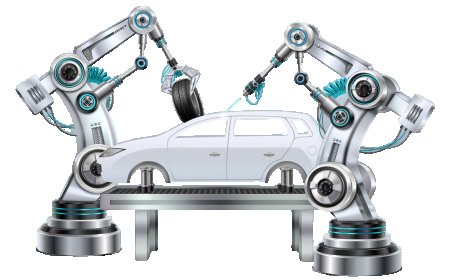
This module focuses on automotive transmission systems, including manual, automatic, and CVTs. It provides students with a hands-on approach to understanding the design and functionality of various transmission components such as gears, clutches, and differentials. Through virtual simulations, students will learn about gear ratio calculations, shifting mechanisms, and the optimization of power transmission in vehicles.

HVAC System Installation Simulation

The HVAC System Installation Simulation teaches students how to install various HVAC systems for residential, commercial, and industrial applications, including furnaces, air conditioning units, heat pumps, and ductwork. The simulation allows students to virtually install HVAC units, duct systems, and venting, while engaging in interactive exercises to connect electrical wiring, refrigerant lines, and water drainage systems. Students receive real-time feedback on installation techniques, component positioning, and overall system integrity.

LMS Integration

imaginX seamlessly integrates with leading LMS (Learning Management Systems), enabling educators to track student performance and allowing students to maintain their work records. It is compatible with popular platforms such as Canvas, Blackboard, Moodle, Google Classroom, Schoology, Sakai, Brightspace/D2L, and can also be used independently of an LMS.

Platform Features

Unlimited users faculty & students
Simulations
Simulations
Pedagogy Experts
Pedagogy Experts
Gamification
Gamification
Multiplayer
Multiplayer
Networking
Networking
Assignments
Assignments
Auto Grading
Auto Grading
AI
AI
LMS Integartion
LMS Integartion
Go Back Top