imaginX is used by many amazing schools and universities

University / College
Learning Objectives

At the end of this simulation, you will be able to:
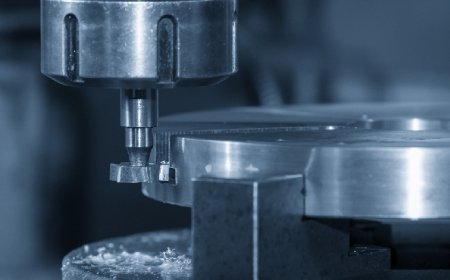
  • Explore the basic functions of machining tools such as lathes, mills, grinders, and drill presses, with virtual simulations for setting speeds, feeds, and cutting depths.
  • Enhance machine operation skills through interactive XR scenarios while following safety protocols, including PPE usage, machine guards, and lockout/tagout procedures.
  • Learn safe tool handling and positioning techniques to ensure accurate and effective machine use.
  • Receive real-time feedback on adherence to safety standards and operational best practices.
  • Practice identifying and correcting potential hazards in a simulated environment for real-world machine safety application.

How do virtual labs work?

Enhance students' involvement in science by immersing them in interactive learning scenarios. Create simulations for experiments, provide hands-on training in laboratory techniques, and convey theoretical concepts through captivating visual experiences to improve their overall long-term learning outcomes.

  • Access web-based simulations that are compatible with laptops, Chromebooks, tablets, and iPads, eliminating the need for software installation.
  • Incorporate a teacher dashboard for automated grading and monitoring of student progress.
  • Utilize embedded quizzes to assist students in mastering scientific content.
  • Comprehensive repository of educational materials, including learning resources, lab reports, videos, theory pages, graphics, and more.

Relevant Course Packages All Course Packages

Troubleshooting HVAC Systems

The Troubleshooting HVAC Systems Simulation teaches users how to troubleshoot common HVAC problems such as system malfunctions, low refrigerant, faulty components, and poor airflow. The simulation includes virtual diagnostic tools like multimeters, pressure gauges, and thermometers to test system components. Interactive fault scenarios guide students in diagnosing and repairing issues such as refrigerant leaks, compressor failures, and blocked filters. Real-time feedback is provided on problem diagnosis, repair accuracy, and system recovery.

Finite Element Analysis (FEA) Simulation

Train students to perform stress, strain, and deformation analysis on mechanical components using Finite Element Analysis (FEA) through immersive XR simulations. The virtual environment allows students to apply loads, constraints, and boundary conditions to 3D models of mechanical components, providing interactive lessons on stress distribution, thermal effects, vibration analysis, and material failure points. Feedback is provided on the structural integrity, safety factors, and optimization of mechanical designs to improve understanding and decision-making in engineering design processes.

Weld Defect Identification and Correction

The Weld Defect Identification and Correction simulation leverages XR technology to train participants in recognizing and addressing common welding defects, ensuring superior weld quality. Through interactive scenarios and real-time feedback, users refine their skills in diagnosing and rectifying flaws.

Failure Mode and Effects Analysis (FMEA) Simulation

Gain expertise in Failure Mode and Effects Analysis (FMEA) through immersive XR simulations. Learn to systematically identify, assess, and mitigate potential failure points in semiconductor manufacturing processes to enhance reliability and quality.

Vibration Analysis and Mechanical Resonance

This XR simulation enables students to analyze vibration patterns and mechanical resonance in rotating and reciprocating systems. They will interact with virtual scenarios where they can examine vibration frequencies, amplitudes, and damping within mechanical structures. The simulation guides students through detecting resonance, identifying sources of vibration, and implementing solutions to reduce noise and wear. Real-time feedback will focus on vibration analysis, system stability, and reliability, providing students with the skills to ensure the durability and optimal performance of mechanical systems.

Electrical Circuits and Systems Simulation

Electrical Circuits and Systems Simulation provides students with the knowledge and skills to design, analyze, and troubleshoot electrical circuits, with a focus on mechatronic applications. Through interactive simulations of DC and AC circuits, students will work with components like resistors, capacitors, inductors, and diodes. Using virtual oscilloscope and multimeter tools, students will measure voltage, current, and resistance, while receiving real-time feedback on circuit functionality, power ratings, and potential faults.

LMS Integration

imaginX seamlessly integrates with leading LMS (Learning Management Systems), enabling educators to track student performance and allowing students to maintain their work records. It is compatible with popular platforms such as Canvas, Blackboard, Moodle, Google Classroom, Schoology, Sakai, Brightspace/D2L, and can also be used independently of an LMS.

Platform Features

Unlimited users faculty & students
Simulations
Simulations
Pedagogy Experts
Pedagogy Experts
Gamification
Gamification
Multiplayer
Multiplayer
Networking
Networking
Assignments
Assignments
Auto Grading
Auto Grading
AI
AI
LMS Integartion
LMS Integartion
Go Back Top