imaginX is used by many amazing schools and universities

University / College

Learning Objectives

At the end of this simulation, you will be able to:
  • Teach students the principles of CNC machine programming and operation, focusing on automated machining processes.
  • Provide hands-on experience in virtually programming CNC machines to perform tasks such as cutting, milling, and shaping materials.
  • Enable students to generate and execute G-code, understanding the role it plays in CNC operations.
  • Help students visualize machining paths in 3D to better understand tool movement and material shaping.
  • Offer real-time feedback on tool wear, precision, and cycle times to help students refine their programming skills and optimize machine performance.

How do virtual labs work?

Enhance students' involvement in science by immersing them in interactive learning scenarios. Create simulations for experiments, provide hands-on training in laboratory techniques, and convey theoretical concepts through captivating visual experiences to improve their overall long-term learning outcomes.

  • Access web-based simulations that are compatible with laptops, Chromebooks, tablets, and iPads, eliminating the need for software installation.
  • Incorporate a teacher dashboard for automated grading and monitoring of student progress.
  • Utilize embedded quizzes to assist students in mastering scientific content.
  • Comprehensive repository of educational materials, including learning resources, lab reports, videos, theory pages, graphics, and more.

Relevant Course Packages All Course Packages

Mechanical System Design and Optimization

Enable students to design and optimize complex mechanical systems through XR simulations. The simulation offers virtual scenarios where students can create and refine mechanical systems like engines, HVAC systems, turbines, and gearboxes. They will use interactive tools to adjust system parameters, reduce weight, improve efficiency, and lower production costs. Real-time feedback will guide students on design constraints, feasibility, and cost-effectiveness, helping them develop the skills to optimize mechanical systems for peak performance.

Environmental Engineering and Sustainability

This XR simulation equips students with knowledge and skills in waste management, pollution control, and sustainable design practices. Students engage in virtual scenarios to design water treatment plants, air pollution control systems, and waste recycling facilities. Interactive lessons emphasize evaluating the environmental impact of construction projects and applying green building practices. The simulation provides feedback on reducing carbon footprints, improving energy efficiency, and achieving sustainability goals.

Laparoscopic Surgery Simulation

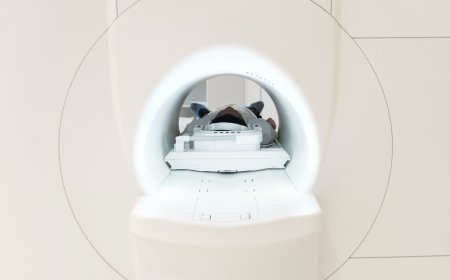
Provide students with an immersive experience in laparoscopic surgery using XR technology, allowing them to practice minimally invasive techniques that require specialized instrument handling. Virtual scenarios will guide students in using laparoscopic instruments, such as graspers, scissors, and camera systems, to perform common procedures like cholecystectomy or hernia repair. Students will receive real-time feedback on instrument insertion, camera navigation, and maintaining visual clarity during surgery.

Fluid Mechanics and Computational Fluid Dynamics (CFD)

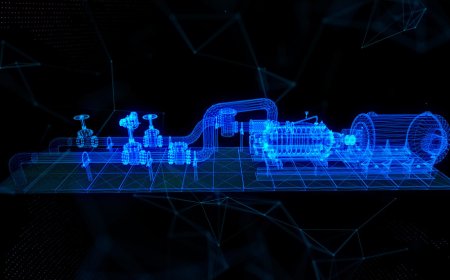
Teach students the principles of fluid dynamics through immersive XR simulations and hands-on practice with Computational Fluid Dynamics (CFD). Virtual scenarios allow students to simulate fluid flow in pipes, pumps, valves, and aerodynamic surfaces, offering a deep dive into the behavior of fluids in different environments. Students will use interactive tools to set up boundary conditions, generate meshes, and analyze flow patterns using CFD software. Real-time feedback focuses on improving flow efficiency, managing pressure drop, understanding turbulence, and optimizing design solutions.

Hybrid and Alternative Fuel Technologies

Hybrid and Alternative Fuel Technologies provides an in-depth exploration of hybrid vehicle systems and alternative fuel technologies, including hydrogen, compressed natural gas (CNG), and biofuels. Through XR-based simulations, students will study the operation and integration of hybrid powertrains, energy storage systems, and alternative fuel tanks. The course emphasizes designing fuel-efficient vehicles using alternative energy sources to reduce carbon emissions.

Signal Processing and Filtering Techniques

The Signal Processing and Filtering Techniques module provides virtual tools and interactive exercises to teach students how to process and analyze electrical signals using both digital and analog filtering methods. Through hands-on simulations, students explore signal conditioning, transformation, and noise reduction techniques.

LMS Integration

imaginX seamlessly integrates with leading LMS (Learning Management Systems), enabling educators to track student performance and allowing students to maintain their work records. It is compatible with popular platforms such as Canvas, Blackboard, Moodle, Google Classroom, Schoology, Sakai, Brightspace/D2L, and can also be used independently of an LMS.

Platform Features

Unlimited users faculty & students
Simulations
Simulations
Pedagogy Experts
Pedagogy Experts
Gamification
Gamification
Multiplayer
Multiplayer
Networking
Networking
Assignments
Assignments
Auto Grading
Auto Grading
AI
AI
LMS Integartion
LMS Integartion
Go Back Top