imaginX is used by many amazing schools and universities

University / College
Learning Objectives

At the end of this simulation, you will be able to:
  • Understand the principles of structural analysis and the behavior of structures under different loading conditions.
  • Simulate and design structural elements such as beams, columns, and trusses using various materials.
  • Analyze the impact of dead loads, live loads, wind loads, and seismic forces on structural integrity.
  • Evaluate the stress distribution, load-bearing capacity, and safety factors of a designed structure.
  • Ensure compliance with engineering standards and optimize designs for strength, stability, and safety.

How do virtual labs work?

Enhance students' involvement in science by immersing them in interactive learning scenarios. Create simulations for experiments, provide hands-on training in laboratory techniques, and convey theoretical concepts through captivating visual experiences to improve their overall long-term learning outcomes.

  • Access web-based simulations that are compatible with laptops, Chromebooks, tablets, and iPads, eliminating the need for software installation.
  • Incorporate a teacher dashboard for automated grading and monitoring of student progress.
  • Utilize embedded quizzes to assist students in mastering scientific content.
  • Comprehensive repository of educational materials, including learning resources, lab reports, videos, theory pages, graphics, and more.

Relevant Course Packages All Course Packages

Vehicle Dynamics and Performance Analysis

Delve into the science of vehicle dynamics with this immersive XR simulation. Students can explore vehicle stability, handling, and ride comfort in various scenarios, analyzing how factors like acceleration, braking, and cornering affect overall vehicle performance. Using virtual simulations, students can test different vehicle configurations, suspension systems, tire mechanics, and aerodynamics to optimize design for real-world conditions.

Underwater Welding Basics Simulation

The Underwater Welding Basics Simulation introduces students to the unique challenges faced by underwater welders in industries like marine, oil, and gas. This simulation allows students to virtually practice underwater welding, including the use of specialized equipment and managing visibility and pressure conditions. It also covers safety protocols, dive techniques, and the key differences between wet and dry welding. Students receive real-time feedback on managing electrical current, welding speed, and ensuring the quality of welds in an underwater environment.

Propulsion Systems and Engine Design

Immerse yourself in the world of propulsion systems with an in-depth exploration of jet engines, rockets, and electric propulsion systems. Through virtual labs, gain hands-on experience in analyzing key engine components, including compressors, turbines, combustion chambers, and nozzles. Engage with interactive simulations that simulate fuel efficiency, thrust generation, and thermal management in propulsion systems, while optimizing engine performance for various operational conditions.

Control System Design and Tuning

Explore the design, simulation, and tuning of control systems for mechanical and electrical applications. Through interactive simulations, students will design feedback control systems using PID (Proportional-Integral-Derivative) controllers to regulate variables such as speed, temperature, or position. Real-time feedback will help students evaluate control system stability, response times, and error minimization for optimal system performance.

Power Electronics and Converters

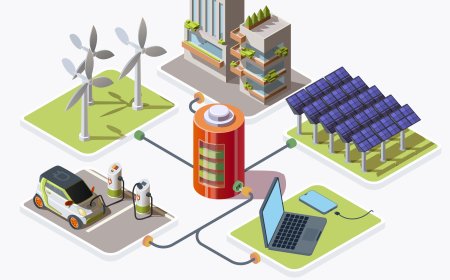
The Power Electronics and Converters module provides virtual environments where students learn the fundamentals of power electronics, including AC-DC, DC-DC, and DC-AC converters. Through interactive simulations, students design, test, and analyze key power conversion circuits while focusing on efficiency, performance, and system optimization.

Thermal Stress Management and Warping Prevention Simulation

The Thermal Stress Management and Warping Prevention Simulation teaches students how to manage thermal stress and prevent material warping during the welding process. It includes virtual scenarios where temperature changes and thermal expansion are monitored while welding. Students engage in exercises to adjust their welding methods, preheat/postheat treatment, or apply clamping techniques to minimize warping. Feedback is given on thermal stress, material distortion, and the effectiveness of preventive measures to ensure high-quality welds.

LMS Integration

imaginX seamlessly integrates with leading LMS (Learning Management Systems), enabling educators to track student performance and allowing students to maintain their work records. It is compatible with popular platforms such as Canvas, Blackboard, Moodle, Google Classroom, Schoology, Sakai, Brightspace/D2L, and can also be used independently of an LMS.

Platform Features

Unlimited users faculty & students
Simulations
Simulations
Pedagogy Experts
Pedagogy Experts
Gamification
Gamification
Multiplayer
Multiplayer
Networking
Networking
Assignments
Assignments
Auto Grading
Auto Grading
AI
AI
LMS Integartion
LMS Integartion
Go Back Top