imaginX is used by many amazing schools and universities

University / College
Learning Objectives

At the end of this simulation, you will be able to:
  • Analyze vibration patterns in aircraft and spacecraft structures through modal analysis and resonance testing.
  • Understand damping techniques and their application to reduce vibrations in aerospace components.
  • Study the frequency response of materials and structures, and learn how to mitigate resonance effects.
  • Learn to apply vibration control methods to improve structural integrity and noise reduction in aerospace systems.
  • Receive feedback on vibration management strategies, evaluating their impact on system stability and overall performance.

How do virtual labs work?

Enhance students' involvement in science by immersing them in interactive learning scenarios. Create simulations for experiments, provide hands-on training in laboratory techniques, and convey theoretical concepts through captivating visual experiences to improve their overall long-term learning outcomes.

  • Access web-based simulations that are compatible with laptops, Chromebooks, tablets, and iPads, eliminating the need for software installation.
  • Incorporate a teacher dashboard for automated grading and monitoring of student progress.
  • Utilize embedded quizzes to assist students in mastering scientific content.
  • Comprehensive repository of educational materials, including learning resources, lab reports, videos, theory pages, graphics, and more.

Relevant Course Packages All Course Packages →

Automotive Electronics and Control Systems

Delve into the realm of advanced automotive electronics, focusing on the integration of sensors, actuators, and electronic control units (ECUs). This XR-enabled module combines immersive environments with interactive tools to provide hands-on experience in designing and optimizing vehicle electronic systems.

Flight Control Systems Calibration and Adjustment

Immerse in an XR-powered environment to master the calibration and adjustment of flight control systems, including ailerons, rudders, elevators, and flaps. Gain hands-on experience in ensuring precision and smooth operation for optimal aircraft control.

Biomedical Signal Processing and Analysis

Equip students with the skills to acquire, process, and analyze biomedical signals such as ECG, EEG, EMG, and blood pressure. Using interactive simulations, learners will explore signal collection from virtual patients, apply signal processing techniques, and interpret data for diagnosing medical conditions.

Renewable Energy Systems (Solar, Wind, and Battery Storage)

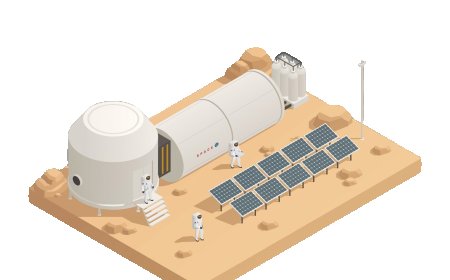
The Electromagnetics and Wave Propagation module offers virtual simulations of renewable energy systems, including solar power, wind turbines, and battery storage. Through interactive exercises, students analyze energy conversion efficiency, system design, and grid integration, gaining a deeper understanding of electromagnetic interactions and wave propagation in renewable energy technologies.

Thermodynamics and Heat Transfer in Aerospace Systems

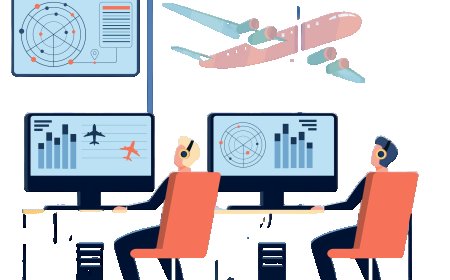
Explore the principles of thermal management in aerospace systems, focusing on efficient heat dissipation and insulation techniques for engines, fuselages, and spacecraft thermal control systems. Through virtual simulations, students will study the heat transfer processes including conduction, convection, and radiation, and apply them to real-world aerospace environments. Engage in interactive lessons to optimize thermal performance and ensure energy efficiency while preventing component overheating.

Thermostat Installation and Calibration

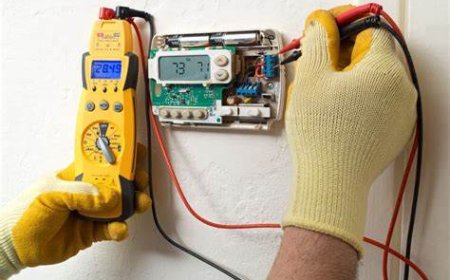
The Thermostat Installation and Calibration Simulation trains users on installing and calibrating HVAC thermostats, including both programmable and smart thermostats. The simulation includes virtual scenarios for installing thermostats, connecting wiring, setting temperature schedules, and configuring Wi-Fi-enabled devices. Calibration exercises ensure thermostats accurately control HVAC systems. Feedback is provided on wiring accuracy, thermostat settings, and energy efficiency improvements.

LMS Integration

imaginX seamlessly integrates with leading LMS (Learning Management Systems), enabling educators to track student performance and allowing students to maintain their work records. It is compatible with popular platforms such as Canvas, Blackboard, Moodle, Google Classroom, Schoology, Sakai, Brightspace/D2L, and can also be used independently of an LMS.

Platform Features

Unlimited users faculty & students
Simulations
Simulations
Pedagogy Experts
Pedagogy Experts
Gamification
Gamification
Multiplayer
Multiplayer
Networking
Networking
Assignments
Assignments
Auto Grading
Auto Grading
AI
AI
LMS Integartion
LMS Integartion
Go Back Top